I work in enterprise UX and systems design at a Fortune 100 agricultural cooperative, with earlier product work in healthcare SaaS. That work brings people, platforms, and different understandings of the same problem into the same room.
The independent projects below let me examine particular questions: how a person corrects an AI reading, how advice stays separate from a decision, and how a complex field becomes easier to learn.
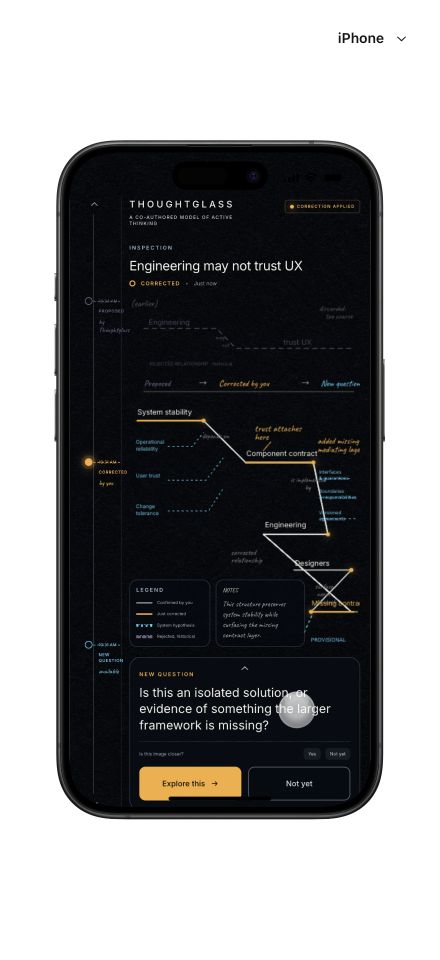
When a system’s reading misses the point, a person needs a way to change the relationship it has drawn.
My contribution: I directed the product’s development, required traceable states, and asked for motion to explain relationships. When the correction loop froze during use, I called for an audit.
Independent project · AI-assisted · Worked interaction demo
Inspect how a proposed reading becomes a visible correction, with the earlier interpretation retained.
When specialists disagree, a single polished answer can hide the very difference a decision-maker needs to inspect.
My contribution: I specified reusable roles, visible disagreement, decision history, and human approval points. Codex contributed substantial technical design and implementation.
Independent project · Local prototype · Synthetic worked example
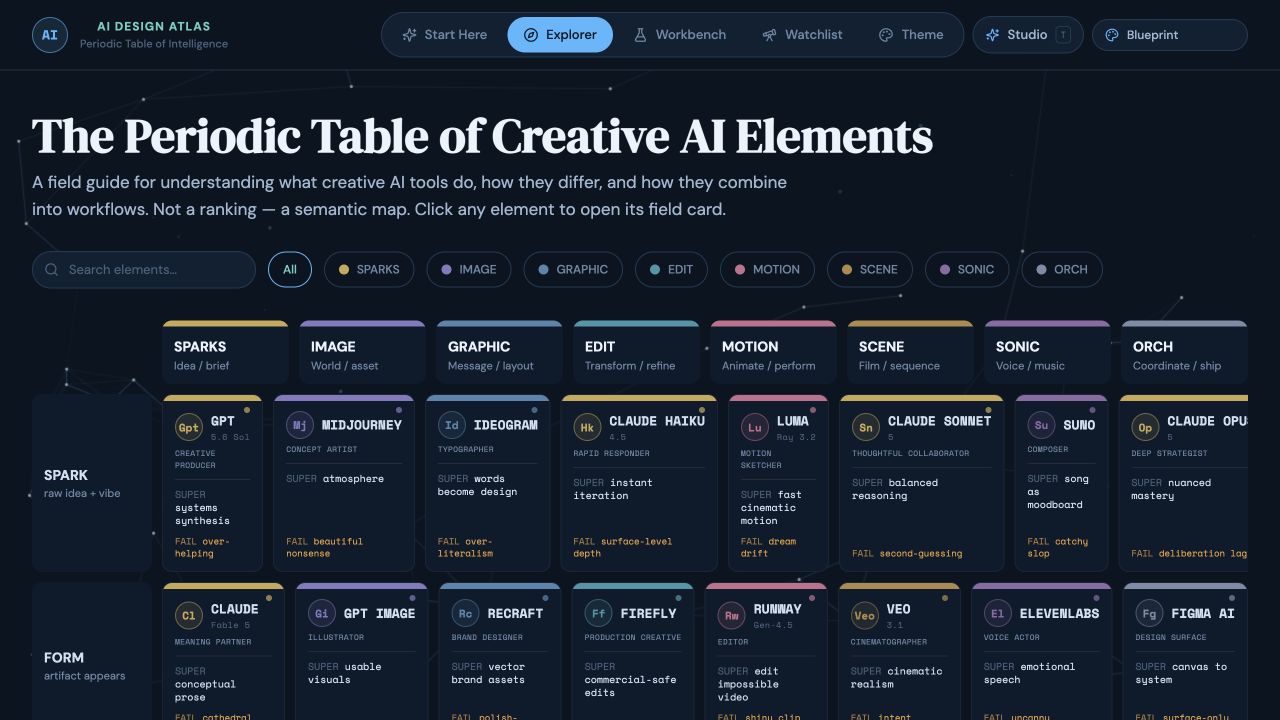
Atlas Explorer · Actual interface capture, September 8, 2026. Tool descriptions are the Atlas’s own framing.
The AI Design Atlas
A way into a complicated field.
A visual language for understanding creative AI tools and imagining how they might work together. Read an element, combine it with others, then examine the idea through different artifacts.
My contribution: I defined the audience and learning purpose, chose reusable theme foundations, and identified where the interface failed to carry those themes through.
Private language, context packs, and one idea run through a music model eight times. The essays and their prompts, transcripts, and audio receipts live here, together.
Working through a complex workflow, an AI interaction, or a design question that crosses teams? I’m interested in making the next step clearer together.